
Introduction: Why Linear Algebra Is the Secret Sauce of AI
When you hear about artificial intelligence (AI), you probably think of self-driving cars, chatbots like ChatGPT, or recommendation systems on Netflix.
But behind every AI breakthrough lies a less glamorous—yet absolutely essential—mathematical foundation: linear algebra.
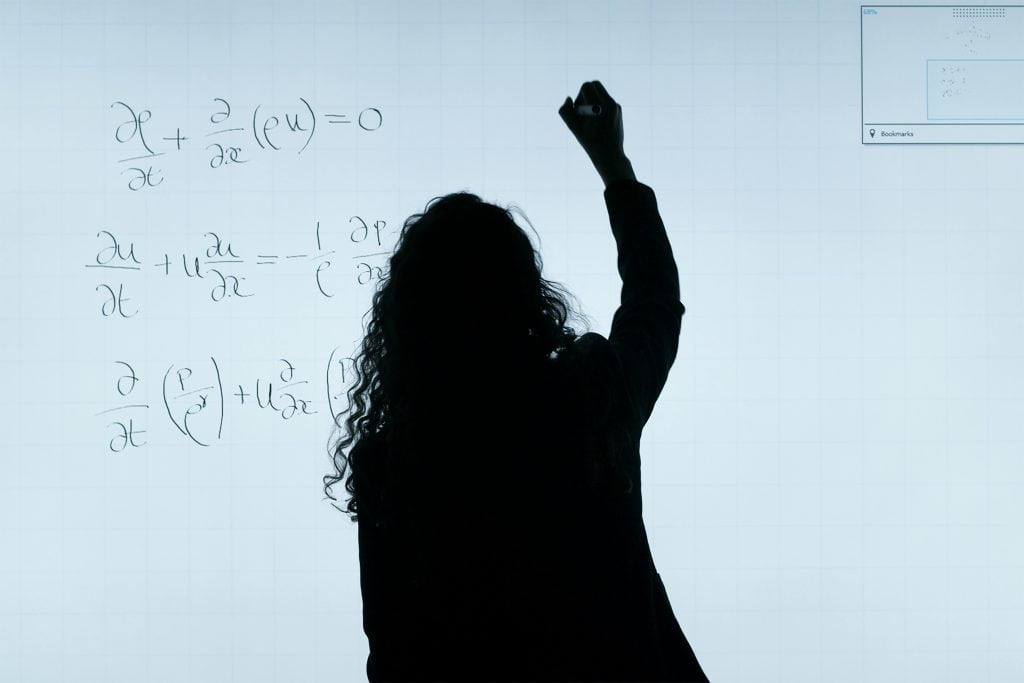
If you’ve ever felt intimidated by the math behind AI, you’re not alone.
Many aspiring data scientists and AI engineers hit a wall when they encounter terms like matrices, eigenvalues, or singular value decomposition.
But here’s the truth: You don’t need to be a math genius to understand linear algebra for machine learning & AI.
You just need the right approach.
In this article, we’ll break down:
✅ Why linear algebra is the backbone of AI (with real-world examples)
✅ Key concepts you must know (matrices, vectors, eigenvalues—explained simply!)
✅ How linear algebra powers machine learning models (from regression to deep learning)
✅ Common mistakes beginners make (and how to avoid them)
✅ The best way to learn linear algebra for AI (hint: a hands-on course helps!)
By the end, you’ll see why linear algebra for machine learning & AI isn’t just for academics—it’s a practical toolkit that unlocks the full potential of AI.
Why Linear Algebra Is the Backbone of AI
1. Data Representation: The Language of Machines
In machine learning, data is often represented as matrices (tables of numbers) or vectors (lists of numbers). For example:
- An image is a matrix of pixel values.
- A dataset is a matrix where each row is a sample and each column is a feature.
- Word embeddings (used in NLP) are vectors representing words in a high-dimensional space.
Linear algebra for machine learning & AI gives you the tools to manipulate these matrices efficiently—whether you’re resizing images, cleaning datasets, or training neural networks.
2. Model Training: The Math Behind the Magic
Machine learning models, like linear regression or neural networks, rely on matrix operations for training. For example:
- Gradient descent (the algorithm that optimizes models) uses vector calculus and matrix multiplication.
- Neural networks perform linear transformations (matrix multiplications) between layers.
Without linear algebra, you wouldn’t be able to train, optimize, or debug these models effectively.
3. Dimensionality Reduction: Making Sense of Big Data
Techniques like Principal Component Analysis (PCA) and Singular Value Decomposition (SVD) rely on linear algebra to:
- Reduce the complexity of high-dimensional data.
- Visualize data in 2D or 3D.
- Improve model performance by removing noise.
4. Deep Learning: The Engine of Modern AI
Deep learning models (like CNNs and RNNs) are built on layers of linear transformations.
Understanding how matrices and vectors interact within these layers helps you:
- Design better architectures.
- Debug models effectively.
- Optimize performance.
5. Efficiency: Speeding Up Computations
Libraries like NumPy, TensorFlow, and PyTorch use optimized linear algebra operations to speed up computations. Knowing the math behind these operations helps you:
- Write faster, more efficient code.
- Understand performance bottlenecks in your models.
- Leverage GPU acceleration effectively.
Key Linear Algebra Concepts for Machine Learning & AI
To excel in AI, you need to understand these core linear algebra concepts:
1. Vectors and Matrices
- Vectors: 1D arrays representing quantities (e.g., a word embedding in NLP).
- Matrices: 2D arrays representing datasets or transformations (e.g., an image or a neural network layer).
Example in Python (NumPy):
import numpy as np

# Vector
vector = np.array([1, 2, 3])

# Matrix
matrix = np.array([[1, 2, 3], [4, 5, 6], [7, 8, 9]])
2. Matrix Operations
- Addition/Subtraction: Combining or comparing matrices.
- Multiplication: Core operation in neural networks (e.g.,
weights * inputs). - Transpose: Flipping a matrix over its diagonal (useful for calculations like dot products).
Example:
# Matrix multiplication
result = np.dot(matrix1, matrix2)
3. Eigenvalues and Eigenvectors
- Eigenvalues: Scalars that represent how much a matrix stretches or compresses space.
- Eigenvectors: Directions that remain unchanged after a linear transformation.
Why it matters:
- Used in PCA (dimensionality reduction).
- Critical for understanding Google’s PageRank algorithm.
4. Singular Value Decomposition (SVD)
- A method to factorize matrices into simpler components.
- Used in:
- Data compression (e.g., reducing image file sizes).
- Recommender systems (e.g., Netflix’s movie recommendations).
- Noise reduction in signal processing.
Example:
# SVD in NumPy
U, S, V = np.linalg.svd(matrix)
5. Linear Transformations
- Functions that map vectors to vectors (e.g., rotating, scaling, or shearing an image).
- Neural networks are essentially compositions of linear transformations.
How Linear Algebra Powers Machine Learning Models
1. Linear Regression
- Uses matrix operations to find the best-fit line for data.
- The normal equation (closed-form solution) relies on matrix inverses.
2. Neural Networks
- Each layer performs a linear transformation (
weights * inputs + bias). - Backpropagation (how models learn) uses chain rule and matrix calculus.
3. Natural Language Processing (NLP)
- Word embeddings (like Word2Vec) represent words as vectors.
- Sentiment analysis uses vector operations to classify text.
4. Computer Vision
- Images are matrices of pixel values.
- Convolutional Neural Networks (CNNs) use matrix operations (convolutions) to detect features.
Common Mistakes Beginners Make (And How to Avoid Them)
| Mistake | Why It’s Bad | How to Fix It |
|---|---|---|
| Skipping the basics | Leads to confusion in advanced topics. | Master vectors, matrices, and operations first. |
| Memorizing formulas | Doesn’t help with problem-solving. | Focus on intuition (e.g., “What does a matrix represent?”). |
| Ignoring NumPy | NumPy is the backbone of AI in Python. | Practice NumPy operations daily. |
| Fear of math | Math is just a tool—you don’t need to be a genius. | Start with applied examples (e.g., “How does PCA work?”). |
| Not coding | Theory without practice is useless. | Implement algorithms from scratch (e.g., matrix multiplication). |
The Best Way to Learn Linear Algebra for Machine Learning & AI
While free resources (like Khan Academy or 3Blue1Brown’s YouTube videos) are great, a structured course helps you apply concepts to real-world AI problems.
🚀 Linear Algebra for Machine Learning & AI on Coursera is perfect for beginners and intermediate learners. Here’s why:
✅ Hands-on exercises (learn by doing, not just watching)
✅ Covers AI-specific applications (eigenvalues, SVD, PCA)
✅ Taught by industry experts (from BITS Pilani)
✅ Certificate of completion (great for your resume) ✅ Self-paced (fit it into your schedule)
What You’ll Learn:
- Matrices and vectors in the context of AI.
- Eigenvalues and SVD for dimensionality reduction.
- How to implement linear algebra in Python (NumPy).
- Real-world applications (e.g., image compression, recommendation systems).
Linear Algebra vs. Calculus in AI: What’s More Important?
| Aspect | Linear Algebra | Calculus |
|---|---|---|
| Role in AI | Data representation, model training | Optimization (gradient descent) |
| Ease of Learning | ⭐⭐⭐⭐ (intuitive with practice) | ⭐⭐⭐ (requires more abstract thinking) |
| Tools/Libraries | NumPy, TensorFlow, PyTorch | Autograd, TensorFlow (for gradients) |
| Key AI Applications | Neural networks, PCA, NLP | Training deep learning models |
Winner for AI? Both! But linear algebra is more immediately useful for understanding models, while calculus helps with optimization.
FAQ: Your Linear Algebra for Machine Learning & AI Questions Answered
1. Why is linear algebra important for AI?
Linear algebra provides the mathematical framework for representing and manipulating data in AI. It’s essential for model training, dimensionality reduction, and neural networks.
2. Do I need to be good at math to learn linear algebra for AI?
No! You only need to understand key concepts (matrices, vectors, operations).
The Linear Algebra for Machine Learning & AI course is designed for beginners.
3. What are the most important linear algebra topics for AI?
Focus on:
- Vectors and matrices
- Matrix operations (addition, multiplication, transpose)
- Eigenvalues and eigenvectors
- Singular Value Decomposition (SVD)
4. How can I practice linear algebra for AI?
- Implement algorithms from scratch (e.g., matrix multiplication in NumPy).
- Apply concepts to real datasets (e.g., use PCA on the Iris dataset).
- Solve problems on LeetCode or Kaggle.
5. Is the Linear Algebra for Machine Learning & AI course suitable for beginners?
Yes! It’s designed for learners with little to no background in linear algebra or AI.
6. Can I learn linear algebra on my own?
Absolutely! Start with:
- 3Blue1Brown’s YouTube series (visual intuition)
- Khan Academy (free lessons)
- NumPy Tutorials (hands-on practice)
7. How does linear algebra help in deep learning?
Deep learning models rely on layers of linear transformations.
Understanding linear algebra helps you:
- Design neural network architectures.
- Debug training issues.
- Optimize model performance.
8. What’s the difference between linear algebra and calculus in AI?
- Linear algebra: Used for data representation and transformations (e.g., matrices in neural networks).
- Calculus: Used for optimization (e.g., gradient descent in training models).
9. Can I use linear algebra without knowing calculus?
Yes! Many AI practitioners focus on applied linear algebra (e.g., using NumPy) without deep calculus knowledge. However, calculus helps with advanced optimization.
10. How do I remember linear algebra concepts?
- Apply them in code (e.g., implement PCA from scratch).
- Use visualizations (e.g., 3Blue1Brown’s videos).
- Teach someone else (explaining reinforces your understanding).
Final Thoughts: Linear Algebra Is Your AI Superpower
Linear algebra for machine learning & AI isn’t just another topic to check off—it’s the foundation that enables you to build, understand, and innovate in AI. By mastering these concepts, you’ll:
- Design better models (neural networks, recommendation systems).
- Debug errors more effectively.
- Optimize performance like a pro.
Ready to unlock the math behind AI?
Start with the Linear Algebra for Machine Learning & AI course on Coursera and build your AI toolkit today!
Affiliate Disclosure: This article contains an affiliate link to Linear Algebra for Machine Learning & AI on Coursera.
If you enroll through this link, I may earn a commission at no extra cost to you. This helps support the free content on networkyy.com! 😊